Monday, 10 September 2018

COMPULSORY DE-MATERIALISATION OF SECURITIES OF THE COMPANY-ARTICLE II

Dear Professional Colleagues,


As marked in our previous article in relation to COMPULSORY DE-MATERIALIZATION OF SECURITIES OF THE COMPANY, it was pre-assumed that Ministry may come up with the proposal of Demat of shares latest by November, 2018.

Since there was an amendment in the LODR in relation to RESTRICTION ON TRANSFER OF SECURITIES IN PHYSICAL FORM by SEBI w.e.f 05.12.2018, subject to certain exemptions, it was seems that MCA shall also mandate on Companies to issue their shares in Demat Form only which shall come into force at the earliest.
Now here the MCA vide its notification dated 10th September 2018 has notified the Companies (Prospectus and Allotment of Securities) Third Amendment Rules, 2018. which shall be effective on 02.10.2018

Applicability of the provisions of the Amendment

The amendment is applicable on Unlisted Public Companies.

A new rule i.e. Rule 9A has inserted into the existing Companies (Prospectus and Allotment of Securities) Rules, 2014.
(1) Every unlisted public company shall
       (a) issue the securities only in dematerialised form; and
       (b) facilitate dematerialisation of all its existing securities 
as per Depository Act, 1996 and its Regulations.

MEANING OF WORD SECURITIES:-
A word securities marked in the above rule which is more important to discuss
As per Section 2(h) of the Securities Contracts (Regulation) Act, 1956 (42 of 1956) which provides the following:

[h] “securities” include- 
(i) shares, scrips, stocks, bonds, debentures, debenture stock or other marketable securities of a like nature in or of any incorporated company or other body corporate; 
  (ia) derivative;
  (ib) units or any other instrument issued by any collective investment scheme to the investors in such schemes;
  (ic)security receipt as defined in clause (zg) of section 2 of the Securitisation and Reconstruction of Financial Assets and Enforcement of Security Interest Act, 2002;
  (id) units or any other such instrument issued to the investors under any mutual fund scheme;
(ii) Government securities; 
  (iia) such other instruments as may be declared by the Central Government to be securities; and 
(iii) rights or interest in securities;

Exemption granted by MCA:
Companies (Prospectus and Allotment of Securities) Amendment Rules, 2019. 
vide it's notification dated January 22, 2019 

This rule (Rule 9A) shall not apply to an unlisted public company which is:—
a) Nidhi Company,
b) Government Company, or
c) Wholly owned Subsidiary.

Above exemption will be effective from date of such notification i.e. January 22, 2019

HOLDING OF PROMOTORS, DIRECTORS, KMP IN DEMAT FORM ONLY
(2) Every Unlisted Public Companies making any offer for issue of:
  • ANY SECURITIES or 
  • BUY BACK OF SECURITIES or 
  • ISSUE OF BONUS SHARES or 
  • RIGHTS OFFER 

shall ensure that before making such an offer, entire holding of securities of its promoters, directors, key managerial personnel has been dematerialised in accordance with provisions of the Depositories Act 1996 and regulations made there under.

RESPONSIBILITIES OF THE UNLISTED PUBLIC COMPANY:


  1. FACILITATE DEMATERIALISATION OF ALL ITS EXISTING SECURITIES: Every unlisted public company shall facilitate dematerialisation of all its existing securities by making necessary application to a depository as defined in clause (e) of sub-section (1) of section 2 of the Depositories Act, 1996. and shall secure International Security Identification Number (ISIN) for each type of security.
  2. CREATION OF ISIN: Creation of ISIN thorough any Depository viz NSDL / CDSL 
  3. INTIMATION TO SECURITY HOLDERS: Inform all its existing security holders about such facility.
  4. PAYMENT OF FEES: Company shall ensure that it makes timely payment of fees (admission as well as annual) to the depository and registrar to an issue and share transfer agent in accordance with the agreement executed between the parties.
  5. MAINTENANCE OF SECURITY DEPOSIT: Company shall ensure that it maintain security deposit, at all times, of not less than two years, fees with the depository and registrar to an issue and share transfer agent in such form as may be agreed between the parties;
  6. COMPLIANCE REQUIRED: Company shall comply with the regulations or directions or guidelines or circulars, if any, issued by the Securities and Exchange Board or Depository from time to time with respect to dematerialisation of shares of unlisted public companies and matters incidental or related thereto.
  7. PENALTY FOR NON-COMPLIANCE: If the Company has defaulted in relation to Point no. 4, 5, 6 as ,mentioned above, then it shall not make an offer of any securities or buyback its securities or issue any bonus or right shares till the payments to depositories or registrar to an issue and share transfer agent are made.
OTHER COMPLIANCES-AUDIT REPORT

Company shall be required to submit an audit report with roc of its jurisdiction on a half yearly basis as provided under Regulation 55A of the SEBI (Depositories and Participants) Regulations, 1996. 

PRACTICAL ASPECTS INVOLVED ON THE PART OF THE COMPANY:-

In order to comply with the provision of the Rule 9A, Company is required to approach to any of the Depository through Share Transfer Agent in order to activate their ISIN which normally takes 12-15 Days time period.

What is ISIN?

The International Securities Identification Number (ISIN) is a code that uniquely identifies a specific securities issue. The organization that allocates ISINs in any particular country is the country's respective National Numbering Agency (NNA).

Elements of the ISIN Number:
An ISIN identifier code has 12 alphanumeric characters and is structured to include:
1. the country in which the issuing company is headquartered
2. the specific security identification number
3. a final character that acts as a security check to deter fraud or misuse 

The first two digits are reserved for the security's country of origin or head office of the issuing company. The second grouping, which is nine characters long, is reserved for the security's unique identifying number. The final digit, known as a "check digit", assures the code's authenticity and lowers the frequency of errors or misuse.
The middle nine digits of the ISIN system number is administered by the local Country's numbering agency, which is called the CUSIP Service Bureau in the United States.

This office was created to improve the numbering system for securities by developing a national standard for the financial industry. The CUSIP Service Bureau was first established in 1964 and continues to enforce the numbering system through a board of trustees


You may get the shares of your Company into Demat by creation of ISIN in simple and easy way.
List of documents required to be submitted by the Issuers at the time of joining NSDL
1.    Letter of intent cum Master Creation Form
2.    Certified true copies of Audited Annual Reports for last two years.
3.    Certified true copy of Memorandum of Association / Articles of Association.
4.    Net Worth certificate from a Chartered Accountant. 
5.    Undertaking from company in the enclosed format (for private limited companies).
6.    Form PAS-3 ROC for all issues if any after the last balance sheet date. Book Value Certificate after the date of last allotment
7.    Form SH-7 if there is any variation in face value of shares or reduction in capital after the last balance sheet date
8.  If the company is already admitted in CDSL, the ISIN activation letter from CDSL to be submitted.
9.    In case of unlisted company, NSDL is charging fee of Rs.30000 + GST for activation.  

Click below for process to be followed by the company to obtain connection with depositories:


For NSDL
For CDSL


For draft formats, cost involved and details of the above documents. contact via csravi2014@gmail.com or Ping at 7838204665 (Call or What's App) with details of the Company.
  • Name of Company:
  • Capital:
  • Corporate Office Address:
  • Name of Contact Person:
  • Contact Details:

PRACTICAL ASPECTS INVOLVED ON THE PART OF THE SHAREHOLDER:-

 For details, please click here

Thank you

​If you like this article then please follow and Subscribe so that you can get our updates in future ……..” freely “

Ravi Garg                                    
Company Secretary                    
91-7838204665,
csravi2014@gmail.com

Tuesday, 4 September 2018

RBI NOTIFICATION REGARDING FILING OF FORM FC-GPR TILL 01.9.2018


RBI NOTIFICATION-


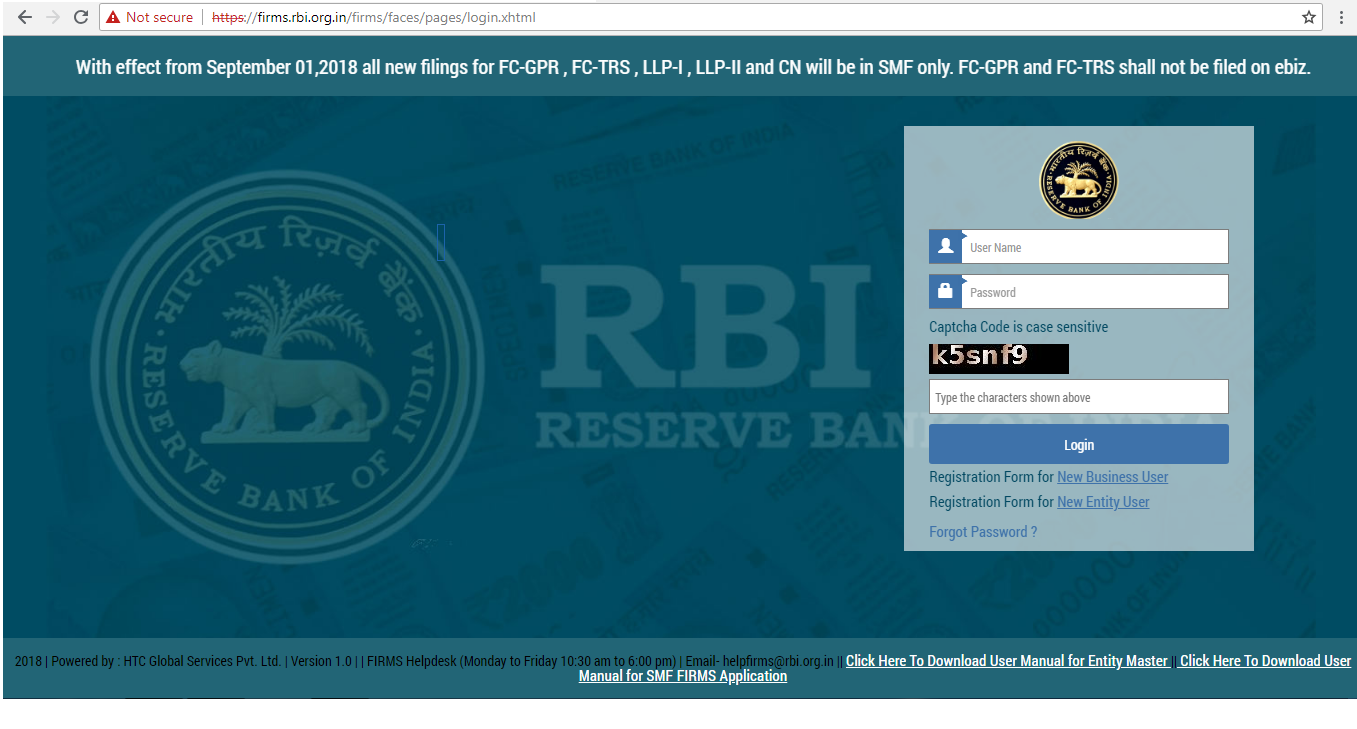
As per the notification from the RBI web portal, all new filings for FC-GPR, FC-TRS, LLP-I, LLP-II and CN will be in SMF only w.e.f September 01, 2018.

Hence Form FC-GPR and Form FC-TRS shall not be filed on EBIZ


Screenshot from RBI Website:

All the Banks are advised to all filings pending for disposal in the e-biz portal at the earliest on or before 20th September 2018. For all cases which are pending at the company/ entity level for re-submission with clarification or additional documents, all such companies, are advised to ensure that cases where re-submission was to be done should be done within one week with complete documents failing which it would be treated as not filed. Further, where the entities have not been able to register for the Entity master, they may do so from September 01, 2018. However, they may provide the reasons for not registering within the time period along with the authority letter.


RBI NOTIFICATION:-


Thank you

​If you like this article then please follow and Subscribe so that you can get our updates in future ……..” freely “

Ravi Garg                                    
Company Secretary                    
91-7838204665,
csravi2014@gmail.com

Saturday, 1 September 2018

How To Self-Finance Your Business

How To Self-Finance Your Business?


One of the greatest concerns for any small company or startup is money. Where do you get the money to start your company, and where do you get money to keep your company going? 
The three most common sources of startup capital are

1) personal savings,
2) cash flows from the business, and
3) credit cards,


Given these numbers it may make sense to answer the question – how do we legally self-finance our business?  The most obvious answer is that we can fund the company when we purchase our ownership percentage in the company.  This initial ownership purchase, however, may not yield substantial funds or does not meet your company’s financial needs. Two common legal self-funding methods are a promissory note (loan) and a convertible promissory note (loan + conversion feature).  We will only cover a promissory note here but we will briefly touch on a convertible note.

A promissory note is a loan agreement that allows the company and individual (be it a founder or other individual) to record the loan and the terms under which it will be governed (interest rate, payment terms, maturity date, etc.).  Below is a step-by-step explanation for how to enter into a promissory note with someone loaning money to the company.  We will also discuss some potential options for the individual and company once the money has been loaned. Preliminary Steps

  • The company is properly formed – See Choosing Your Startup’s Legal Entity and How To Form a Delaware Corporation.
1.  Board Minutes (or Member Meeting) Approving Promissory Note
  • What is it? Typically, the Board or Members of a company must approve the company entering into debt, even with a founder of the company.
  • What to do? Draft the Minutes and have the Secretary or President of the company sign them.
2.  Execute A Demand Promissory Note
  • What is it? The loan instrument which allows the company to enter into a binding debt agreement.  Typical terms in such an agreement should address the interest rate, payment terms, and the maturity date.
  • What to do?  Draft the promissory note, record the amount to be loaned or the portion that has been loaned up to that point to the company.  Have both parties sign the note.  A well drafted promissory note for a startup or small business just starting out should allow for the note holder (the person loaning the money) to continually add to the amount under the note – such as if the holder is continually putting charges on a credit card.  If the holder is loaning lump sums of cash as the company needs it, then they can record that as well without having to create a new note for each installment of cash. For good record keeping, both parties should keep records of the note and update it simultaneously.
3.  Optional – Promissory Note Forgiveness
  • What is it? Sometimes repayment of a loan is not in the best financial interest of the company when the maturity date of the loan comes about.  The note holder and the company can choose to extend the maturity date of the note or forgive the note altogether.
  • When to use? Optional.  When the note holder wishes to forgive the note.  Totally up to the note holder.
  • What to do? Have the note holder execute a loan forgiveness agreement and have both parties sign this.  Also, for good record keeping, there should be a record of the loan forgiveness in the company ledger.
4.  Optional – Use The Promissory Note To Purchase A Convertible Note
  • What is it? A convertible note is similar to a loan in that the company can repay the principal and interest.  A convertible note, however, also has a mechanism which allows it to be converted into stock of the company.  Typically this conversion is triggered when the company raises its first venture capital money (also know as a “qualified financing”), and the principal and interest on the note is used to purchase shares of the stock being offered in the qualified financing.  Convertible notes are well know for their use in family & friend or angel financings.  A promissory note can be used as consideration (used to pay) for a convertible note when the company chooses to issue convertible notes in a family & friend or angel financing thus allowing the lending founder to gain equity for his or her additional financing contribution.
  • When to use? Optional.  When the note holder wishes to get equity in exchange for his loan to the company.
  • What to do?  Creating a convertible note and subsequently executing individual note purchase agreements will be discussed in another post.  In short, the note purchase agreement which will be exchanged for the promissory note must contain language referencing the promissory note and the total amount of principal and interest.
Disclaimer: We have published the above write-up after discussion with the members of the UP Councel (Mr. Himanshu Agarwal from UpCounsel's core team) "This article was originally published at UpCounsel”

For Article on Trademark Registration Process, click the below link:
http://csravi2014.blogspot.com/2017/03/trademark-registration-process-byCSRaviGarg.html


Thank you

If you like this article then please follow and Subscribe so that you can get our updates in future ……..” freely “

About the author

Matt Faustman

Matt Faustman

Matt is the co-founder and CEO at UpCounsel. Matt believes in the power of online platforms to change antiquated ways of life and founded UpCounsel to make legal services efficiently accessible. He is responsible for our overall vision and growth of the UpCounsel platform. Before founding UpCounsel, Matt practiced as a startup and business attorney.

Blog Supported by:
Ravi Garg                                    
Company Secretary                    
91-7838204665,
csravi2014@gmail.com
Sunday, 26 August 2018

How to Hire a Great Business Lawyer?

How to Hire a Great Business Lawyer?


A good foundation is crucial in starting any business and one of the pillars that keep a business stout and upright is a great business lawyer. As a business owner, you want to allot your focus and energy in running and growing the business while someone else is on top of understanding the legalities that surround the business. Just how crucial is it to have an attorney right at the very beginning of your business journey?

The Challenge

Almost every aspect of your business would call for an effective business attorney – from choosing the business type upon putting up the company, to writing contracts, resolving business claims and issues, and navigating mergers and acquisitions, to name a few. A common mistake businesses make is holding off hiring a business lawyer until they need one. Here are some of the aspects of a business in which a business lawyer plays an integral role.
  • Preparing contracts with clients and suppliers. Business lawyers know how to make contracts iron-clad in order for all parties to be well-protected. When signing a contract for any reason, your attorney will be in charge of spotting issues and negotiate revisions to contracts with loopholes that can potentially put you in unnecessary liabilities in the future.
  • Securing intellectual properties through trademark and copyright protection. While patents and copyrights are handled by intellectual property specialists, your business attorney can help you with these as they are part of legal networks. It would be an advantage if your business lawyer can also help you acquire patents and copyrights.
  • Transacting with landlords and real estate sellers. In terms of dealing with properties, and this includes leasing and warehousing, a business lawyer can thoroughly review contracts and agreements to make sure that you are getting into a fair and legitimate deal with a seller. Your lawyer must have a standard “tenant’s addendum” that contains provisions in your favor, which can be included in the printed lease document.
  • Knowing the tax consequences of your business transactions. You want to make sure that you do not encounter unnecessary tax liabilities while on business. While your accountant takes care of preparing and filing of taxes, having a business lawyer means you have somebody who knows how to register your business for both federal and state tax IDs, and understands the tax consequences of your business transactions.

Venues for Finding an Attorney

In your search for a great business lawyer, make use of various resources. This will garner more options and give you the ability to make a valid judgement. There are many channels that you can utilize and here are some of them:
  • Referrals. It is important to understand that every lawyer has their own strengths, and one way to gauge whether a lawyer is best fit for your particular problem is to seek the advice of people who have experienced the same. Find out who they hired at the time, and gather leads from there. However, relying solely on referrals might not give you reliable leads as the relationship between the business owner and lawyer will depend on how they respond to each other’s style and personality.
  • Local Bar Association. A bar association is a professional organization of lawyers serving different purposes. Most bar associations make referrals based on specific areas of law, which can help you find a lawyer with the right expertise and area concentration. However, there are services that make referrals without concern for the lawyer’s level of experience. Seek out referral services that work under programs certified by the American Bar Association.
  • Online Services. Sites such as Upcounsel can aid in finding and connecting with top-rated business attorneys who can provide a wide array of business law services for startups and large businesses alike.

Caveats

Hiring a business lawyer is a major investment for any business, which is why optimal sourcing techniques are very crucial in this process. Not finding the right lawyer for your business will cost you money, and can potentially lead to long-term consequences for your company. Watch out for these red flags when making a decision:
  • The lawyer is not well-versed in the language of your business. In order to properly represent you, your business lawyer must speak your language and understand the field in which you are operating.
  • The lawyer is learning on the job. Your business should not be your lawyer’s on-the-job training. If you see that the lawyer is doing something completely new to him, he may not be the best candidate to represent your business.
  • The lawyer comes up with extra costs. Hiring a business lawyer should be a well-calculated move, and needless to say, it should be cost-effective. Surprise and extra costs must always be kept to a minimum.

Choosing an Attorney

After exhausting your resources to find the right business lawyer and coming up with a short list of candidates, it is time set up interviews. In your initial meeting, be ready and upfront in describing your business and your legal needs. Make sure to express that you are interested in building a long-term relationship. Take careful notes of what the lawyer says and does during the interview, and pay attention to these aspects:
  • Experience. Begin by asking how long they have been practicing law and their areas of expertise. Assess whether their expertise is aligned with the needs of your business.
  • Ability to communicate. It is crucial that you and your business lawyer have rapport, and you can gauge this as early as your initial interview. Your lawyer must be able to express himself clearly, without the use of too much jargon or legalese.
  • Availability. Ask the best way to reach him and how quickly he responds to phone calls or emails. Will he be available after business hours? This is crucial in your working relationship.
  • References. Ask the history of business and cases he had handled in the past, and see if they are similar with yours. You can also ask for a list of clients you can contact to ask about his competence, service, and fees.
  • Fees. Ask about his rate and the payment terms – flat, hourly, capped, etc. It is important to get this information as you can use it when you compare your candidates. However, do not decide based on the rate alone. The lowest rate may not be indicative of quality work.  
Disclaimer: We have published the above write-up after discussion with the members of the UP Councel (Mr. Himanshu Agarwal from UpCounsel's core team) "This article was originally published at UpCounsel”


For Article on Trademark Registration Process, click the below link:
http://csravi2014.blogspot.com/2017/03/trademark-registration-process-byCSRaviGarg.html


Thank you

If you like this article then please follow and Subscribe so that you can get our updates in future ……..” freely “


Blog Supported By:
Ravi Garg                                    
Company Secretary                    
91-7838204665,
csravi2014@gmail.com

Ravi Garg

  TOP 10 MISTAKES COMPANIES MAKE BEFORE FILING A DRHP: LESSONS FOR A SUCCESSFUL IPO JOURNEY   By CS Ravi Garg, Company Secretary   An Initia...